What Is Turbot and Why It's a Chef Favourite

Turbot is one of the most prized flat fish in European cooking, and a regular fixture on the menus of restaurants and Michelin-starred kitchens. With its clean flavour, firm white flesh and natural richness, it is a fish that chefs return to again and again. You do not need a restaurant booking to enjoy it, though. When it is freshly sourced and carefully prepared, turbot is just as impressive cooked at home.
What is turbot?
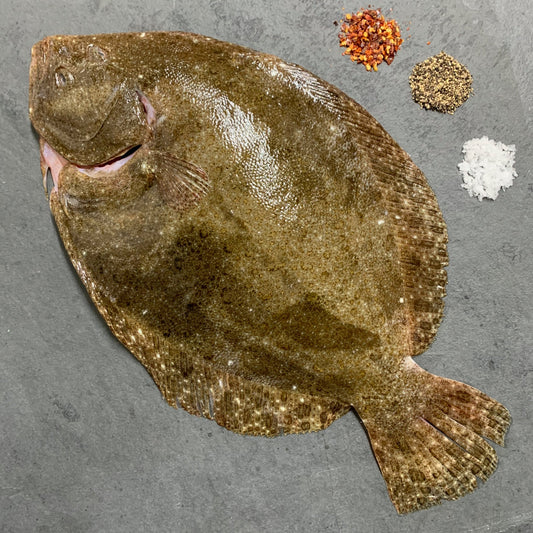
Turbot is a wild flat fish caught in the North East Atlantic and regularly landed at Brixham Fish Market. It is easy to recognise by its rounded, disc-like body and speckled skin, with small bony nodules across the top side rather than scales. It has a higher natural gelatine content than most white fish, which gives it a silky texture when cooked. The flavour is mild, clean and gently buttery, which makes it suited to delicate sauces and to simple grilling alike.
What does turbot taste like?
Turbot has a firm yet tender texture and a clean taste that is far from strong. It is often compared to Dover sole or halibut, though with a slightly richer mouthfeel. The flesh holds its shape during cooking, which is why it works so well roasted whole or cut into thick steaks across the bone.
How to cook turbot
Its texture and flavour lend turbot to a range of methods:
- Oven-roasted. Whole turbot or fillets roast well with lemon, herbs and a little olive oil.
- Pan-fried. Fillets crisp up nicely with a simple butter baste.
- Grilled. Good for summer cooking, as turbot holds firm on the grill and pairs well with salsa verde or citrus.
- Poached or steamed. A gentle method that shows off the clean flavour, often served with a beurre blanc.
Whichever way you cook it, keep the accompaniments restrained. Turbot has enough character of its own that it does not need much help.
Why chefs love turbot
- Texture. Firm, meaty and silky on the palate.
- Versatility. Suits delicate sauces, bolder marinades, and both classic French and modern cooking.
- Presentation. A whole roasted turbot makes a fine centrepiece for the table.
Turbot and its relatives
Turbot belongs to a family of flat fish that are well worth knowing, as several can stand in for one another depending on what you can get and what you want to spend:
- Brill is turbot's closest relative and the usual substitute. It is a little softer and more delicate, gently sweet, and often a little more affordable. If a recipe calls for turbot, brill will rarely let you down.
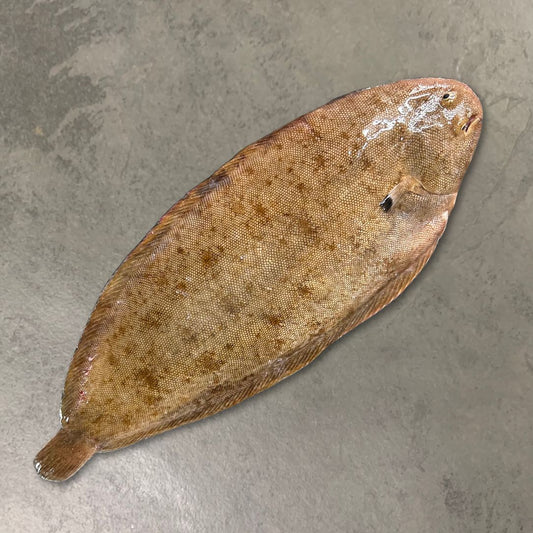
- Dover sole is firmer and finer, with a clean, slightly nutty flavour, and is happiest cooked simply on the bone.
- Lemon sole is softer and sweeter than Dover sole, and a good everyday choice for quick cooking.
- Plaice is the lightest of the group, delicate and quick to cook, and a gentle introduction to flat fish.
For more on choosing between the two top flat fish, see our guide to brill or turbot.
Buying and storing turbot
Fresh turbot should smell clean, of the sea, with firm flesh and a moist sheen. Because the fish is large, it is usually sold as fillets or as steaks cut across the bone, and a little goes a long way thanks to its richness. Keep it chilled and cook it within a day or two, or freeze it on the day it arrives if you are not cooking it straight away.
Frequently asked questions
Is turbot a good fish to eat?
Turbot is held in high regard for good reason: it has a firm, silky texture and a clean, mildly buttery flavour, and it holds its shape well when cooked. It is one of the flat fish chefs reach for most.
What does turbot taste like?
Mild, clean and gently buttery, without being strong or overly fishy. The texture is firm yet tender, a little richer than Dover sole.
What is a good substitute for turbot?
Brill is the closest match and the usual stand-in, being from the same family with a similar flavour and a softer texture. Halibut or Dover sole will also work in most turbot recipes.
Is turbot the same as brill?
No. They are closely related and look alike, but turbot is rounder with bony nodules on the skin, while brill is more oval and smooth. Turbot is firmer, brill more delicate.
Fresh from Brixham, delivered to you
At Hamiltons Fish we buy our turbot at Brixham Fish Market and prepare each fish to order. It reaches you fresh, never previously frozen, and vacuum-packed to hold its quality. Whether you are planning a special dinner or simply enjoy fine seafood, turbot is an elegant choice.
Order fresh turbot from Hamiltons Fish, landed at Brixham and delivered to your kitchen. You can also browse the full flat fish range.